Featured Publications
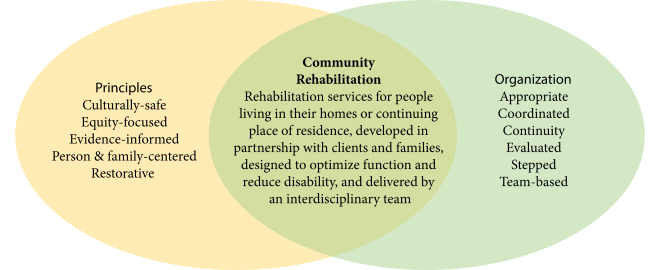
(2024) Health & Social Care in the Community – Sibley et al. Development of a Conceptual Framework for Adult Community Rehabilitation Policy, Planning, Care, and Research: A Multimethod Qualitative Approach (Open Access)
To address recognized gaps in community rehabilitation service coordination and advance delivery of rehabilitation services for adults living outside of institutions, a conceptual framework was developed in this project to inform the design of community rehabilitation policy, planning, care, and research. The contextualized, action-oriented conceptual framework for adult community rehabilitation (CFACR) is supported by older people, family caregivers, and community rehabilitation health system providers. Continued work to refine and validate the components in more population groups and contexts will facilitate implementation and application of the CFACR.
(2023) BMC Health Research Policy and Systems. Sibley et al. – Characterizing Canadian funded partnered health research projects between 2011 and 2019: a retrospective analysis (Open Access)
Involving research users in collaborative research approaches may increase the relevance and utility of research findings. The primary objectives of this research were to (i) identify and describe characteristics of Canadian federally and provincially funded health research projects that included research users and were funded between 2011 and 2019; (ii) explore changes over time; and (iii) compare characteristics between funder required and optional partnerships.
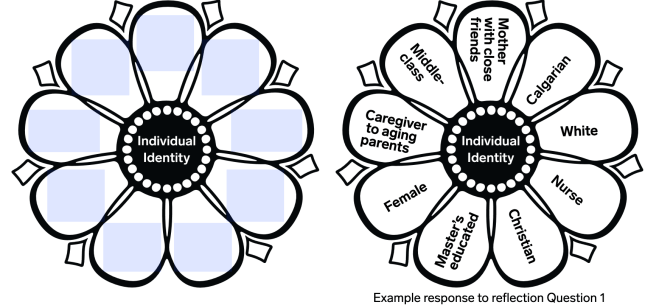
(2022) BMC Health Services Research – Sibley et al. Development and usability testing of tools to facilitate incorporating intersectionality in knowledge translation. (Open Access)
The field of knowledge translation (KT) has been criticized for neglecting contextual and social considerations that influence health equity. Intersectionality, a concept introduced by Black feminist scholars, emphasizes how human experience is shaped by combinations of social factors (e.g., ethnicity, gender) embedded in systemic power structures. Its use has the potential to advance equity considerations in KT. Our objective was to develop and conduct usability testing of tools to support integrating intersectionality in KT through three key phases of KT: identifying the gap; assessing barriers to knowledge use; and selecting, tailoring, and implementing interventions.
(2022) Health Research and Policy Research – Tittlemier et al. A scoping review to identify and describe the characteristics of theories, models and frameworks of health research partnerships (Open Access).
Engaging users of health research, namely knowledge users, as partners in the research process may to lead to evidence that is more relevant to the users. This may optimize the uptake of evidence in healthcare practice, resulting in improved health outcomes or more efficient healthcare systems. However, barriers to involving knowledge users in the research process exist. Theories, models and frameworks may help guide the process of involving knowledge users and address barriers to engaging with knowledge users in research. This paper concluded the models and frameworks identified could be utilized by researchers and knowledge users to inform aspects of a health research partnership, such as guidance or implementation of a partnership.
(2022) Public Library of Science (PLoS) – Sibley et al. Recognition of Knowledge Translation Practice in Canadian Health Sciences Tenure and Promotion Documents: A Summative Content Analysis (Open Access)
There has been growing emphasis on increasing impacts of academic health research by integrating research findings in healthcare. The concept of knowledge translation (KT) has been widely adopted in Canada to guide this work, although lack of recognition in tenure and promotion (T&P) structures have been identified as a barrier to researchers undertaking KT. This project explored how KT is considered in institutional T&P documentation in Canadian academic health sciences. Our analysis of T&P documents from primarily research-intensive Canadian universities showed a lack of formal recognition for a comprehensive approach to KT and emphasis on traditional dissemination. This research supports recommending that institutions explicitly and comprehensively consider KT in T&P and align documentation and procedures to reflect these values.
(2021) BMC Geriatics – Touchette et al. – Design characteristics and inclusion of evidence-based exercise recommendation in fall prevention community exercise programs for older adults in Canada: a national descriptive self-report study (Open Access)
Training balance through exercise is an effective strategy to reduce falls in community-dwelling older adults. Evidence-based fall prevention exercise recommendations have been proposed, specifying that exercise programs should: (1) provide a high challenge to balance, (2) be offered for a least three hours per week, (3) be provided on an ongoing basis. Community exercise programs have the potential to deliver effective fall prevention exercise; however, current design characteristics and whether they include the recommendations is not known. This study described design characteristics of fall prevention community exercise programs for older adults (50 years and older) across Canada, and explored whether these programs included the three evidence-based exercise recommendations.
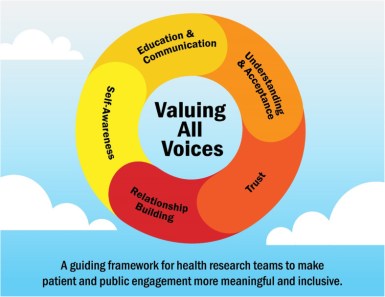
(2020) Research Involvement and Engagement Roche et al. – Valuing All Voices: refining a trauma-informed, intersectional and critical reflexive framework for patient engagement in health research using a qualitative descriptive approach.
Critical stakeholder-identified gaps in current health research engagement strategies include the exclusion of voices traditionally less heard and a lack of consideration for the role of trauma in lived experience. Previous work has advocated for a trauma-informed, intersectional, and critical reflexive approach to patient and public involvement in health research. The Valuing All Voices Framework embodies these theoretical concepts through four key components: trust, self-awareness, empathy, and relationship building. The goal of this framework is to provide the context for research teams to conduct patient engagement through the use of a social justice and health equity lens, to improve safety and inclusivity in health research. The aim of this study was to revise the proposed Valuing All Voices Framework with members of groups whose voices are traditionally less heard in health research.
 Kathryn M. Sibley, PhD